Showing posts with label Book. Show all posts

May 3, 2012

Cover Released for A Memory of Light [Breaking News Musing]


How relevant. Since I just finished Towers of Midnight.

This cover, by Michael Whelan, was released today, May 3rd.

I hope I don't piss too many people off or hurt any feelings by saying this, but I think this may be the first Wheel of Time cover I've even close to liked. Someday I want a hardcover set of the Australian editions. I think they look very nice.

I really, really did not like Darryl K. Sweet's unfinished cover art. I have a question for WOT dedicates actually; it has been a long time reading to get through this and I don't really remember every detail, but should the flame of Tar Valon and the Dragon's fang make a full yin yang, with a dot of black in the white part and a dot of white in the black? I don't remember the dots being there in the early descriptions. In fact, I don't think it would make any sense.

I get that it's unfinished but I don't like the concept at all. That's supposed to be Elayne, Avhienda and Min? Could be any three women in the bloody world. Again, it's unfinished, but I don't think Sweet could have accomplished bringing our girls to life anyways.


I had the same issue with almost every Sweet cover. He never depicted the characters the way I saw them. He would give Perrin his axe and Mat his hat and ashandarei and think that was all there was to making the characters identifiable. Where's the mischevious expression on Mat's face, the worried one on Perrin's? And why does Rand look like the least interesting hero of all time? I found Sweet's images to be cartoony, which is probably really bad, generic marketing for a Fantasy series, and uninteresting. Don't judge a book by it's cover; this series is very interesting and imaginative, unlike Sweet's work.

May 2, 2012

Towers of Midnight by Robert Jordan and Brandon Sanderson [Review Time]


In the prologue of the last of the currently available Wheel of Time books, Jordanderson show that they can make things happen in a mere 20 pages. They move plots. They develop characters. They twist, turn and shock. The only problem is that this novel is one thousand two hundred and eighteen fricking pages in the American paperback edition. That's like The Lord of the Rings plus The Hobbit. If you've hung in for this long and read up to book 13, then it's worth it to wade through the sea of this book, against the current at times, just to get to this prologue where things actually change, but you have to go through about 1200 pages to get there. It's insanely long, but what have we come to expect from Robert Jordan, and did you really think Brandon Sanderson could change anything? Naive.

March 4, 2012

The Magical, Sublime, Aweful, Fantastical, Mysterious Night Circus! by Erin Morgenstern[Review Time]

Within the black-and-white striped canvas tents is an utterly unique experience full of breathtaking amazements. It is called Le Cirque des RĂªves, and it is only open at night.
The Night Circus by Erin Morgenstern has received nothing but praise since its September of 2011 release. I'm not going to go against the grain much here. If you have been searching for more magic since the first time you ever picked up The Hobbit and have been having a hard time finding it, wading through second rate Fantasy re-hashings of the same story over and over, The Night Circus is what you were wishing for all these years. If Tolkien's fading magic made you sad and made you long for a world where the magic wasn't waning but waxing and found in abundance around every corner, The Night Circus is the perfect read for you. Every last word is just plain magical.

You are put in the position of a Reveur, or dreamer: one who has fallen in love with the magical circus. You are given various tastes, smells, touches, sounds and images of the circus that make you fall in love with it instantly, and then you are told the story of the circus and the stakes involved in its existence.

The Circue du Reves was created as the arena for a mysterious type of duel or competition in which neither of the contenders know the rules or even whom their opponent is. But these two contenders, Marco and Celia, are the protagonists we come to care deeply for, and when their competition begins to take a dangerous turn, and it seems one or the other must die for the contest to end, we are split on the issue. But there's plenty of magic and spectacle to distract us from the problem as we watch the circus travel for a few decades and continue to amaze us, night after night.

In fact, the magic is so prevalent in the story that it begins to outshine the plot and the drama. My only complaint would be that there wasn't quite enough tension in the story, such that I never believed for a second that the good guys weren't going to win. But this is Morgenstern's debut novel and hopefully we will see more and better from her in the future. We might not get a very tight story arc here, but what we get is pure excess of imagination. We get to see the workings of a brilliantly creative mind playing with possibilities and the impossible. If that sounds good to you, take a visit to the circus. Become a Reveur with me.

February 2, 2012

A Theme of Themesea. By Ursula Theme Le Guin. [Review Time]

Only in silence the word,
Only in dark the light,
Only in dying life:
Bright the hawk's flight on the empty sky.
Well isn't this just your graying literature prof's wet dream. A Wizard of Earthsea really gets in there with the themes and then hits you over the head with them, repeatedly. Let's see, we have lots of good stuff on identity, the power of language, arrogance, forces in opposition, balance, and the mentor/pupil relationship. Well done, Ursula Le Guin, you've really gotten a lot of shit packed in there, and you really milked it for all it was worth.

October 28, 2011

Revisiting Eragon in the Wait for Inheritance


It goes without saying to anyone who has read the Inheritance Cycle, books 1 to 3, that what makes this dragon story stand out from all of the others is the character of Saphira. In fact, we are told early and often that dragons in Paolini's world are as self-aware, strong-willed and intelligent as humans are, but what we are not spoon-fed is the realisation of what a powerful character she is. We are told that dragons are more powerful, wise and majestic than humans, and Eragon feels she is a little bit alien to him in her nature. It's somewhat obvious that a dragon should have a very different character, personality and nature to a human but I'm not sure if anyone has really succeeded at it like Paolini. I mean, how does a human write a non-human character?

October 24, 2011

The Girl with the Dragon Tattoo [review by starlight]

In the evening he went to the cinema to see The Lord of the Rings, which he had never before had time to see. He thought that orcs, unlike human beings, were simple and uncomplicated creatures.
There's nothing like an impending movie release from a great director like Fincher to motivate a reading race in this reviewer. Of course I couldn't not notice this bestseller and its sequels gracing the bookshelves over the past few years, nor could I resist the urge to pick up something popular this decade after years within the scholarly bubble. The Girl with the Dragon Tattoo turned out to be the perfect modern period piece, with issues on many levels - from personal, to corporate, to international intrigue.

October 5, 2011

New Spring, a Prequel by Robert Jordan [review time]


For a novel expected to deliver on that idyllic moment when Lan agrees to be Moiraine's warder, New Spring is largely ineffectual. It certainly didn't contain what I expected from the prequel. I mean, I expected Jordan to have a hard time being concise and moving the plot at a decent pace, but I also expected that he would be able to reign himself in and make sure he accomplished everything he could with the novel set at the time of Rand's birth. Like perhaps actually spanning the 20 years between when Rand was born and when Moiraine found him in Emond's Field. Surely I can't be the only person who actually expected Jordan to cover all that material. But of course, our Creator isn't known for spanning decades with leaps and bounds in a mere 360 pages. He's better known for covering a few months in 900.

September 19, 2011

Heretics of Dune [review time]

The fifth in Herbert's Dune series, Heretics sums up the shortcomings and accomplishments of the series. Long-winded and large scope, it misses the mark in creating tension for the reader, but we'll give it a break out of love. Heretics delivers on the promises made by Book 1, but do we really care anymore? Our hero Paul Atreides is long dead and his descendants are involved in a power struggle between the Bene Gesserit and the Tleilaxu. The problem is, either we don't have all of the pieces of the puzzle, or this puzzle is not complex enough to be worthy of settling the matter of universal domination.

August 9, 2011

The Road by Cormac McCarthy [review time]

"He thought perhaps they'd come to warn him. Of what? That he could not enkindle in the heart of the child what was ashes in his own. Even now some part of him wished they'd never found this refuge. Some part of him always wished it to be over."
An incredible literary author takes a stab at post-apocalyptic fiction - and nails it. The Road is chilling, deliberate, and beautifully written. It opens up many avenues of thought and questioning with a poetic hand while still giving horror-seekers the thrill they are after. The last of the human race after an unexplained armageddon run and hide from those turned to cannibalism and human-farming to fill their bellies. McCarthy claims that this story was written to say something about his relationship with his son, and the dead land-scape of a fallen America is the setting for his message: that we do what we can to pass on our values to our children, who must eventually replace us.


The protagonist of the novel is known only as "the man", his son, "the boy." This could really be a story about any man in the post-apocalyptic situation, travelling from the northern US to warmer climes in a desperate attempt at survival. He is unnamed and largely uncharacterized, leaving plenty of room to relate to him. The man knows that he will not always be there to protect the boy, and has to teach him to make it in the world on his own - not only in a practical sense, but also as one of the last of the human race. The story is about keeping humanity alive and passing down what makes us human even when our entire civilization is gone.


The story is largely driven by the quest for food, and basic survival. The Road is so bleak and depressing that we get excited even when the man finds shrivelled dry apples to live off for a while, to keep going, keep trekking onward and "carrying to fire." Driving home the horrors of this world are some very graphic images and the constant feel of being hunted and tracked throughout the novel. The Road is darkly horrifying, yet satisfying.

August 8, 2011

Not sure what to make of this: The Road by Cormac McCarthy [musing time]


There's just one passage of McCarthy's The Road in the first person and I'm really not sure what to make of it! Really neat but it seems very out of place and also contains some breaks in continuity. I have an exam tomorrow in which I want to write about this, I'd love to see what other people think about it! Here is the passage:

The dog that he remembers followed us for two days. I tried to coax it to come but it would not. I made a noose of wire to catch it. There were three cartridges in the pistol. None to spare. She walked away down the road. The boy looked after her and then he looked at me and then he looked at the dog and he began to cry and to beg for the dog's life and I promised I would not hurt the dog. A trellis of a dog with the hide stretched over it. The next day it was gone. That is the dog he remembers. He doesn't remember any little boys.

August 5, 2011

Subjectivity of Nature in Tinkers by Paul Harding [review time]


Paul Harding’s Tinkers is concerned with the separation between man and nature, an important theme of literature since Romantic Poetry. Humanity is incapable of experiencing nature objectively; it can only be experienced subjectively in that it is always coloured by human interpretation. Tinkers has many of what I will call Borealis pieces, where one of George's grandsons reads to him from an old journal in his handwriting. The natural experience is filtered through a human perspective in these pieces, and human actions disrupt the natural scenes. Human, man-made objects also intrude on these passages. Personification assimilates nature to humanity rather than understanding what nature really is. The Borealis pieces in Tinkers draw attention to the subjectivity of nature in its impenetrability from human understanding.

July 30, 2011

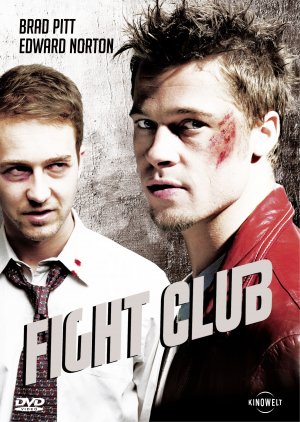
Reading Chuck Palahniuk's Fight Club [review time]

"Well. Whatever. You can't teach God anything."
It's very hard to review this book without comparing it to the movie, but Fight Club as a novel really impressed me. It's unsurprising, given that typically an original book will be better than it's screen adaptation, but Fight Club is a rare case where the movie comes close and in some ways even supersedes the novel. The ending of the film adaptation has been praised by critics, but I find that it's very epic and world-relevant - it makes a clear point about Tyler and what he wants for society, his world view - where the novel's ending is more character-centred and I find it magnificent. If you haven't picked up this book yet, you really should. The movie stayed fairly close in terms of plot and even specific scenes, but there are extra goodies that you'll really enjoy if you're into Tyler Durden's philosophy.

July 4, 2011

Fantasy in Paul Harding's Tinkers [story time]

It seemed to me as if my father simply faded away. He became more and more difficult to see. One day, I thought he was sitting in his chair at his desk, writing. To all appearances, he scribbled at a sheet of paper. When I asked him where the bag for apple picking was, he disappeared. I could not tell whether he had been there in the first place or if I had asked my question to some lingering afterimage. He leaked out of the world gradually, though. At first, he seemed merely vague or peripheral. But then he could no longer furnish the proper frame for his clothes. He would ask me a question from behind the box on which I sat shelling peas or peeling potatoes for my mother, and when I answered and received no reply back, I would turn around, to find his hat or belt or a single shoe sitting in the door frame as if placed there by a mischievous child. The end came when we could no longer even see him, but felt him in brief disturbances of shadows or light, or as a slight pressure, as if the space one occupied suddenly had had something more packed into it, or we'd catch some faint scent out of season, such as the snow melting into the wool of his winter coat, but on a blistering August noon, as if the last few times I felt him as another being rather than as a recollection, he had thought to check up on this world at the wrong moment and accidentally stepped from whatever wintry place he was straight into the dog days. And it seems that doing so only confirmed to him his fate to fade away, his being in the wrong place, so that during these startled visits, although I could not see him, I could feel his surprise, his bafflement, the dismay felt in a dream when you suddenly meet the brother you forgot you had or remember theinfant you left on the hillside miles away, hours ago, because somehow you were distracted and somehow you came to believe in a different life and your shock at these terrible recollections, these sudden reunions, comes as much from your sorrow at what you have neglected as it does from dismay at how thoroughly and quickly you came tobelieve in something else. And that other world that you first dreamed is always better if not real, because in it you have not jilted your lo lover, forsaken your child, turned your back on your brother. The world fell away from my father the way he fell away from us. We became his dream.

Another time, I found him fumbling for an apple in the barrel we kept in the basement. I could just make him out in the gloom. Each time he tried to grab a piece of fruit, it eluded him, or I might say he eluded it, as his grasp was no stronger than a draftof air threading through a crack in a window. He succeeded once, after appearing toconcentrate for a moment, in upsetting an apple from its place at the top of the pile, but it merely tumbled down along the backs of the other apples and came to rest against themouth of the barrel. It seemed to me that even if I could pick an apple up with my failing hands, how could I bite it with my dissipating teeth, digest it with my ethereal gut? Irealized that this thought was not my own but, rather, my father's, that even his ideaswere leaking out of his former self. Hands, teeth, gut, thoughts even, were all simplymore or less convenient to human circumstance, and as my father was receding fromhuman circumstance, so, too, were all of these particulars, back to some unknowable froth where they might be reassigned to be stars or belt buckles, lunar dust or railroadspikes. Perhaps they already were all of these things and my father's fading was because he realized this: My goodness, I am made from planets and wood, diamonds and orange peels, now and then, here and there; the iron in my blood was once the blade of a Roman plow; peel back my scalp and you will see my cranium covered in the scrimshaw carved by an ancient sailor who never suspected that he was whittling at my skull-no, my blood is a Roman plow, my bones are being etched by men with names that mean sea wrestler and ocean rider and the pictures they are making are pictures of northern stars at different seasons, and the man keeping my blood straight as it splits the soil is named Lucian andhe will plant wheat, and I cannot concentrate on this apple, this apple, and the only thing common to all of this is that I feel sorrow so deep, it must be love, and they are upset because while they are carving and plowing they are troubled by visions of trying to pick apples from barrels. I looked away and ran back upstairs, skipping the ones that creaked,so that I would not embarrass my father, who had not quite yet turned back from clay into light.

-Paul Harding

June 23, 2011

Pottermore Announced!

(Click on it for a full size)

I was a little underwhelmed by the Pottermore announcement - until I saw this image! Looks incredible. From what Rowling said, it seemed to me this would just be something along the lines of an RP/Fanfiction site, the only difference with those already found on the internet being bonus features - Rowling's own additions. But look! House points! If this is something closer to a great Hogwarts themed RPG, then I'm super excited!

Let's hope this leaked image is the real deal, and not someone's clever ploy ;)

June 17, 2011

More Potter! JK Rowling launches PotterMore.com for an exciting announcement! [breaking news musing]


The countdown is on to a big Rowling announcement in 5 days time! This sounds really exciting, like something I've been waiting for for the past 4 years since The Deathly Hallows came out, but let's not get our hopes up that there will be a Harry Potter 8. Speculation is that it could just be a Harry Potter themed Android phone (lame). On the other hand, if there are to be further Harry Potter books, is this really a good thing? Can Rowling keep up the quality of the previous 7 books?

I know I'll be the super optimist, don't get me wrong. Just hope I'm not let down! I hope there's more Harry Potter books to come, and I hope they'll be amazing!

At first I thought it would be best to wait to hear what the news is before starting the debate, but I'm curious - what do you think the announcement could be, how likely do you think it is that we're talking more HP books, and do you think this would be a good thing? Let me know what you think!

June 1, 2011

Beloved by Toni Morrison - Ghost Story or Psychological Thriller? [review by starlight]

"Why was there nothing it refused? No misery, no regret, no hateful picture too rotten to accept? Like a greedy child it snatched up everything. Just once, could it say, No thank you? I just ate and can't hold another bite?"
This is not a story to pass on. At least, that's the refrain of this dark tale of life after slavery. It really is a story that should be passed on, because it seems as though we've forgotten the horrifying brutality of slavery in America. If the novel ends by saying that this is not a story to pass on, it begins by dedicating itself to the "sixty million and more" black slaves brought across from Africa, a few million of whom died on the journey across. Many stories of freedom focus on the stiff upper lips, the singing in the fields, the heads held high against all adversity, despite every misfortune thrown against them, and the awaiting of a brighter future.

April 28, 2011

Harry Potter and the Deathly Hallows Part 2 Trailer [breaking news musing]

As always, I cried as I watched this. I don't know why Harry Potter trailers do this to me. The trailers are better than the films. Except for the part when they spoil the ending by showing clips of Harry fighting Voldemort. I hate when they do that.

I'm excited for this movie, because there's no way it could -not- be epic. They just can't screw it up... can they? In theatres July 15, 2011.

April 27, 2011

Atheist Tales - "A New Beginning" by Bill R. Moore [review by starlight]

"As centuries turned into millennia, and millennia into eons, Their job was at last done. The creatures whose bodies They now inhabited were newly sentient."
Upon first reading Moore's Atheist Tale, I found I was at a loss for what the story was trying to get across - which makes it an instant masterpiece, in my books. In a way, it was a peculiar choice to start off the anthology with, because it isn't what one would expect from a collection of short stories about Atheism. When you pick up this antho, no doubt you'll be looking for stories condemning religion, arguing against the existence of God, and pointing out the absurdities propagated by the Bible. Moore's story, at least at surface level, does none of these things. Instead, Moore creates a piece that really gets you thinking about our preconceptions about the world, whether we are atheistic or religious. It's difficult to tell at first glance what this story is really about, and I'v decided that it's a great opener for that reason - it challenges the reader's expectations right from the get go.

Now I would love to leave it up to each of you to figure out how Moore's story promotes freethinking atheism, but I can't resist telling you what I think, myself.

April 26, 2011

Why you should re-read The Lord of the Rings [review of The Two Towers]

Where now are the horse and the rider? Where is the horn that was blowing?
Where is the helm and the hauberk, and the bright hair flowing?
Where is the hand on the harpstring, and the red fir glowing?
Where is the spring an the harvest and the tall corn growing?

They have passed like rain on the mountain, like a wind in the meadow;
The days have gone down in the West behind the hills into shadow.
Who shall gather the smoke of the dead wood burning,
Or behold the flowing years from the Sea returning?
It's time to read The Lord of the Rings again. I know it, you know it, so get on it. What's it been, five years? Ten? I know why you're avoiding this. You love these books, you watch the movies all the time, but it just seems so daunting, reading all one thousand pages, paying attention to all those characters, places, the history, the scenery. I know it seems like a lot of work, but you've done it once before. And today I'm going to tell you why it only get easier - if you've watched the films 50 times like a good citizen of the 21st century.

April 25, 2011

Atheist Tales - "Dear Theologian" by Dan Barker [review by starlight]

"I know that I exist. I know that I could not have created myself. I also know there is no higher God that could have created me. Since I can't look above myself, then perhaps I should look below myself for a creator. Perhaps - this is speculative, so bear with me - perhaps you created me." -God

I couldn't help but skip to Dan Barker's Atheist Tale after all the hype it's gotten. Originally published in Barker's Godless: How an Evangelical Preacher Became One of America’s Leading Atheists, this stand-alone story is a fictional letter from God to a doctor of theology, asking the same questions man has asked for centuries. God is very confused as to how he came into existence, how he is expected to be the ultimate judge of morality, and what his purpose is. It's a rational argument that combats all of the typical theological debates, and put in the mouth of the Big Man himself, it's very convincing.